What I Hope You Understand Before the Future Arrives

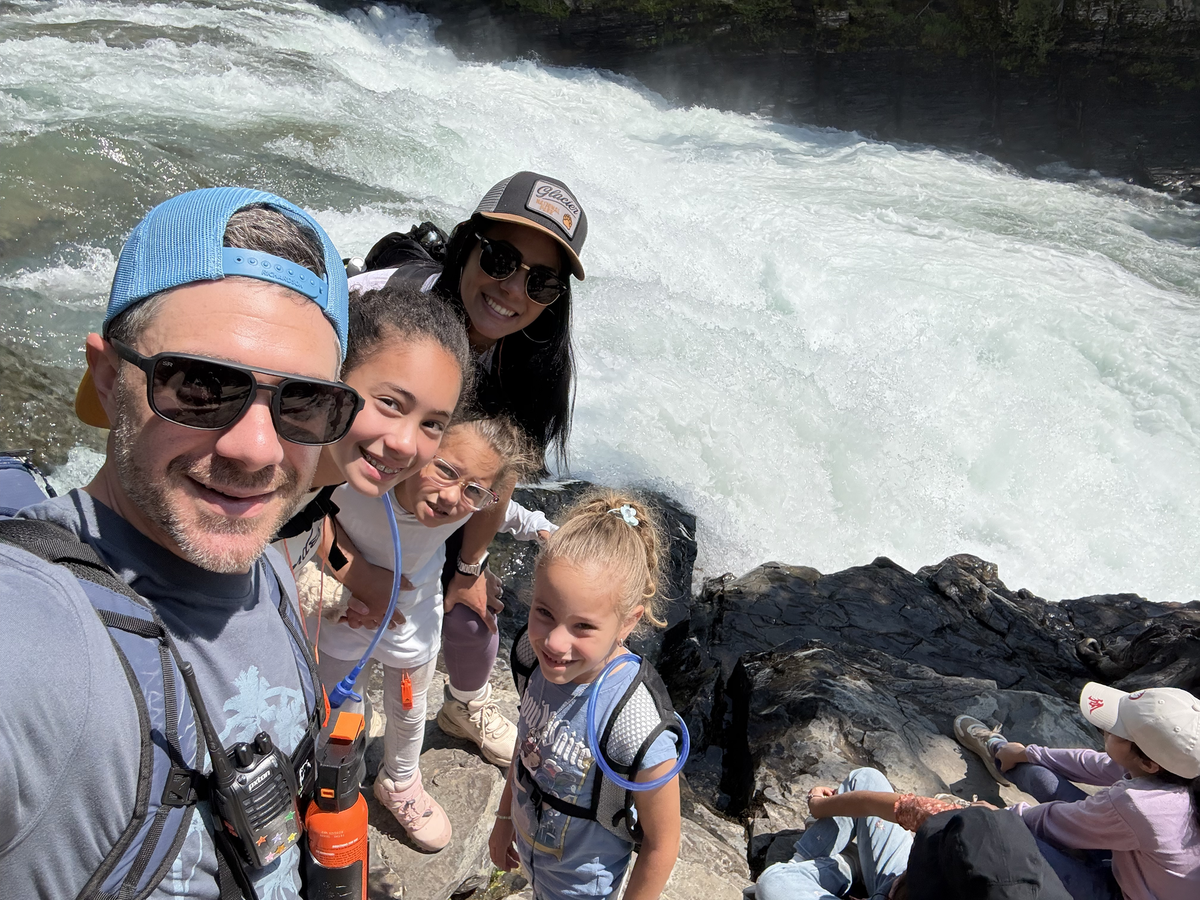
I wrote this for my daughters who at the time of writing are still young enough to see the world with innocence.
Not as a prediction of the future — because I do not trust predictions that much — but as an attempt to leave behind principles sturdy enough to survive uncertainty.
Maybe one day this letter will feel outdated in its specifics.
I hope it never becomes outdated in its intentions.
To my Girls,
If you are reading this, then you are old enough for me to tell you something honestly:
I do not truly know what kind of world you will inherit.
I can guess. I can observe trends. I can warn about dangers. But every generation eventually learns the same humbling lesson:
The future rarely arrives the way people expect it to.
When I was younger, many people believed the internet would naturally make humanity wiser because knowledge would become accessible to everyone.
What we discovered instead was something more complicated.
Access to information does not automatically create wisdom.
The tools changed humanity, but they also revealed humanity.
And the tools emerging in your lifetime may change things even more.
By the time you are adults, machines may create ideas, software, entertainment, scientific discoveries, art, and even relationships in ways that blur the line between what is human-made and machine-made. Entire industries may appear and disappear quickly. Some jobs people thought were permanent may vanish. New forms of power may emerge alongside new forms of manipulation.
Some predictions people make today will prove completely wrong.
Others will not go far enough.
“The future rarely arrives the way people expect it to.”
That is why I do not want this letter to depend too heavily on predictions.
I want it to rest on principles that survive uncertainty.
Because while technology changes rapidly, some things about humanity change very slowly.
People will still need trust.
They will still need love.
They will still need courage during uncertainty.
They will still need wise people who can remain calm when others panic.
And civilizations will still depend on systems that must function reliably:
food,
water,
energy,
medicine,
communication,
families,
communities,
and shared trust.
No matter how advanced the world becomes, fragile systems still fail when neglected.
The Age of Noise
For a long time, creating something impressive was itself proof of capability.
A working prototype meant something.
A polished presentation meant something.
A difficult piece of software meant something.
Why?
Because those things were hard to produce.
But when creation becomes cheap, the world fills with noise.
And when noise rises, society changes.
A polished idea may hide weak foundations.
A confident answer may be completely wrong.
A viral company may collapse because nobody understood its economics.
A machine may imitate wisdom without understanding truth.
“When creation becomes cheap, discernment becomes priceless.”
The bottleneck is no longer:
“Can someone make this?”
The bottleneck becomes:
“Can someone determine what is actually true, useful, safe, durable, and worth trusting?”
Many people will struggle with this more than they realize.
Because appearances are becoming easier to manufacture.
Learn to See Beneath the Surface
I want you to become the kind of people who can look beneath appearances.
Whenever you encounter something impressive, train yourself to ask:
“What must be true underneath this for it to keep working?”
If someone claims a business is revolutionary:
What funds it?
Who maintains it?
What breaks under pressure?
If a technology seems magical:
Who controls it?
What are the failure modes?
What happens when it is wrong?
If a person sounds wise:
Do their actions match their words over time?
Do they create stability or chaos around them?
If a system appears successful:
Who carries the hidden costs?
What happens when conditions become difficult?
Most people stop at the surface.
“Learn to trace consequences.”
That habit alone may protect you from many mistakes.
Adaptability Over Prediction
I also want you to understand something important:
You do not need certainty about the future to prepare for it well.
People often think preparation means predicting correctly.
Usually it means becoming adaptable.
Learn how to learn.
Learn how to recover from failure.
Learn how to stay calm under pressure.
Learn how to cooperate with other people.
Learn how to recognize when you are wrong.
These abilities remain valuable across almost every possible future.
“Strong people are not the ones who predict perfectly. They are the ones who adapt without losing themselves.”
Do Hard Things
A meaningful life is rarely built from comfort alone.
Do hard things sometimes on purpose.
Practice discipline in a world that profits from distraction.
Practice depth in a world flooded with noise.
Practice patience in a world demanding speed.
Practice honesty in a world increasingly rewarded for performance.
A frightening number of people may lose the ability to focus deeply, struggle honestly, or persist through difficulty.
Do not.
Build real competence.
Do not confuse talking about something with understanding it.
Touch reality directly.
If you want to understand business, sell something.
If you want to understand leadership, take responsibility.
If you want to understand people, help them when helping is inconvenient.
If you want to understand technology, build and maintain something real.
Reality exposes weak foundations eventually.
“Easy things often create fragile people. Difficult things often create capable ones.”
Stay Humble
Most importantly, stay humble.
You will be wrong about many things.
So will powerful people.
So will experts.
So will I.
Do not build your identity around never being wrong.
Build it around being willing to learn.
The future may belong to people who can combine strength with humility:
people confident enough to act,
but humble enough to adapt when reality proves them mistaken.
A Final Hope
If this letter has one core message, it is this:
Do not become passive inside the future you inherit.
Study it.
Question it.
Improve it.
Protect what is good within it.
Repair what is broken within it.
And leave something better behind for the people who come after you.
You do not need to save the whole world.
But you should leave your corner of it better than you found it.
“In loud times, become someone who can still hear what matters.”
Love always,
Dad
I increasingly believe the defining skill of the next era may not be intelligence alone, but discernment — the ability to recognize what is true, meaningful, durable, and human in a world flooded with synthetic abundance.